The No-Audition Heart Habit: Why Singing With Others Is Worth a Try
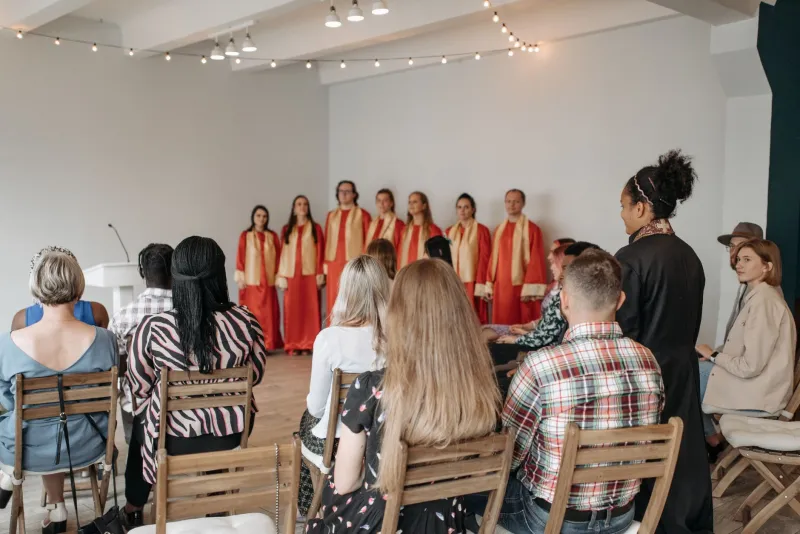
There is a particular kind of British courage involved in walking into a village hall, taking a seat and opening your mouth in front of strangers. No one expects you to be good. That is rather the point. A local singing group is not an audition; it is a room full of people breathing together, having a go and going home a little lighter. And while it will never replace a brisk walk or your GP, that combination of breath, rhythm and company is quietly worth considering for your heart.
At H4RT we are not here to turn singing into a prescription. Think of it more as a low-stakes heart habit with a social side order. No Lycra, no personal best, no one shouting at you to feel the burn.
What actually happens when you sing
Singing is not just a noise coming out of your face. It is a whole-body activity, even when you are sitting down. You lengthen your exhale, you use your diaphragm more deliberately, and you generally slow your breathing compared with a normal hurried day. Your heart rate tends to follow your breathing, rising slightly on the inhale and easing on the exhale. That is one reason singing can feel calming rather than strenuous.
Good singing posture helps too: feet on the floor, shoulders not up by your ears, ribs able to move. You are, in effect, practising a relaxed upright stance and a slower breath without calling it either of those things. For people who find formal relaxation exercises a bit awkward, that can be a useful back door.
There is also the stress side. Singing with others asks you to listen, watch, breathe and respond, which leaves less room for the mental hamster wheel. Some research on group singing has found changes in mood, breathing and heart rate that look favourable, though the studies are often small and the effects vary. It is fair to say singing may help you feel calmer and more connected. It is not fair to say it treats heart disease.
The social bit is not a side dish
Heart health is not only about cholesterol and step counts. Feeling connected to other people matters, and loneliness can weigh on both mental and physical health. A choir offers something precious: regular, low-pressure contact with other humans, built around a shared task. You do not have to make sparkling conversation. You can turn up, sing, have a biscuit and leave. For some people, that is exactly the right amount of social contact.
The routine helps as well. A weekly rehearsal gives the week a anchor, gets you out of the house and gently nudges you into a different room with different people. In British terms, it is a bit like a club without the competitive edge of a quiz league. There may be tea. There may be a raffle. Your heart will not know or care about the raffle, but the rest of you might.
Finding a choir without the fear
You do not need to read music, have a range or know your alto from your elbow. Plenty of community choirs are open-access and built for people who last sang at school assembly. Look at library noticeboards, community centre newsletters, church hall posters, local Facebook groups and Nextdoor. The Natural Voice Network lists choirs that tend to be welcoming and non-auditioned. Rock Choir runs popular no-audition sessions in many UK towns. Workplace choirs and singing for health groups are also worth asking about.
If you are not sure where to start, a social prescribing link worker at your GP surgery may know local groups. When you contact a choir, ask the practical questions: Is there a trial session? Can I sit down? Is there parking or a bus stop nearby? Do you warm up? Is there a fee? A good group will be happy to answer without making you feel like you are applying for a mortgage.
Starting at home, gently
If a group feels like a big leap, begin with five minutes at home. Hum along to the radio while the kettle boils. Sing in the shower. Try a slow breath in through the nose and a long, gentle hum out. Stand comfortably, drop your shoulders and see how it feels. You are not aiming for perfection; you are aiming for a bit of breath and a bit of pleasure.
Singing at home will not give you the full social benefit of a choir, but it can help you get used to using your voice again. Keep the volume comfortable. Do not strain for high notes. If you feel dizzy, stop and sit down.
If you have a heart condition
This is the sensible bit. If you have a heart condition, have recently had a heart attack, stent, heart failure, an arrhythmia or cardiac surgery, or you get breathless or dizzy with mild activity, speak to your GP, consultant or cardiac rehabilitation team before joining a new singing group. Singing is generally gentle, but your clinical team knows your particular heart.
Once you have the green light, pace yourself. Sit if you need to. Keep water nearby. Avoid holding your breath or pushing for a note that is not coming. Do not ignore chest pain, unusual breathlessness, palpitations or feeling faint. If you have severe chest pain, call 999. A choir leader is not a cardiologist, and they should not be asked to be one.
A small harmony
The point of a local singing group is not perfect pitch. It is the pause, the breath and the people beside you. It is a weekly reminder that looking after your heart does not always have to feel like a chore. Sometimes it can sound like a room full of ordinary voices making something better together.