The Pavement Between the Post Office and the Park: A 20-Minute Heart Walk
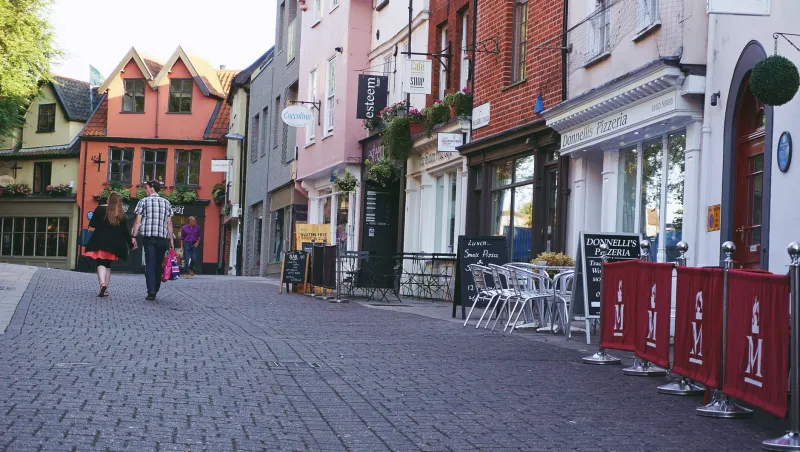
Most heart movement advice sounds as if it belongs in a leisure centre. But the most useful walking route in Britain might be the one between the post office, the library, the pharmacy and the little park behind the church hall. It is free, it is familiar and it does not require you to own a single piece of Lycra.
A high street loop works because it fits the life you already have. You are going out anyway. You need bread, stamps or a prescription. The trick is to stop treating that trip as a Series of Small Standing Stillnesses and start treating it as a route.
Start With a Landmark, Not a Workout
Pick a start point you can find half-asleep: the post office door, the bus shelter, the library steps, the war memorial, the corner where the market sets up. Then make a loop, not an out-and-back. The difference matters. A loop feels like a circuit you can repeat. An out-and-back can feel like a chore you have to undo.
You do not need a fitness tracker. Use a map app once, note the shape, then leave the phone in your pocket. Aim for roughly 20 minutes at an easy pace. If your high street is small, loop twice. If it is long, use one side of the road going out and the other coming back. The route should be dull enough to remember and interesting enough to notice.
The Twenty-Minute Shape
Think of the loop in three soft sections. The first five minutes are a warm-up at the speed you would walk to catch a bus you are not quite chasing. The middle ten minutes are brisk — not race-walking, just a bit more purpose. You should be able to talk, but not belt out a song. The last five minutes ease off as you head back to where you started.
Errand stops are not a failure. They are rests. Queueing at the pharmacy, nipping into the greengrocer or pausing to let someone pass all break up the walk. If you only have ten minutes, do half the loop. If you have thirty, add the park path. A loop is not a test.
Dress for the Walk You Actually Have
November on a British high street is a layering problem, not a reason to stay in. Start with a base layer, add a fleece or jumper, then a waterproof shell. Grippy shoes matter more than fancy trainers. A reflective strip or a light-coloured coat helps when the afternoon dims by four o'clock.
Keep gloves in your pocket and a thin hat in your bag. The high street often gives you shelter — a covered market, an arcade, a shop doorway — so you can adjust layers without ending the walk. If it is truly foul, walk the covered stretch twice and call it done. The point is to keep the habit warm, not to prove something to the weather.
Shortcuts for Knees, Hips and Breathing
A high street loop can be adapted without turning it into a medical plan. If pavements are uneven, choose the side with dropped kerbs and wider paving. If hills are a struggle, stay on the flat stretch between the library and the park. If standing still makes your hips stiff, keep the errand stops short and walk on the spot while you queue.
Bench-to-bench is a perfectly good first version of the route. Sit for a minute, walk to the next bench, sit again. If walking is painful rather than merely tiring, speak to a pharmacist, GP or physiotherapist. A heart walk should feel manageable, not punishing.
Make It Social Without Making It a Club
You do not need a walking group with a logo. Ask one neighbour, one friend or one family member to come along. Walk and talk. Meet at the bench outside the library. Do the loop, then get a coffee or go home. No step counts, no comparing paces, no group chat full of graphs.
If you have children, the loop can double as a scooter or pram route. If you are visiting an older relative, the loop can be the thing you do before tea. The social part is not a bonus. Walking with someone else makes the route easier to repeat, and repetition is where the heart benefit quietly lives.
Keep It Repeatable
Attach the loop to something that already happens. Saturday morning paper. Thursday prescription. The school pick-up if it is close enough. The same time each week is easier than a perfect plan. If you miss a week, the loop will still be there. It does not know you skipped it.
The high street changes with the seasons, which keeps the route from going stale. In December there are lights to look at. In January there is a reason to walk off the mince pies. In spring the park beds come back. You are not training for anything. You are using the pavement between the post office and the park to keep your heart moving, one ordinary errand at a time.