Benches, Bins and a Blood Pressure Cuff: How to Read Your High Street Like a Heart Test

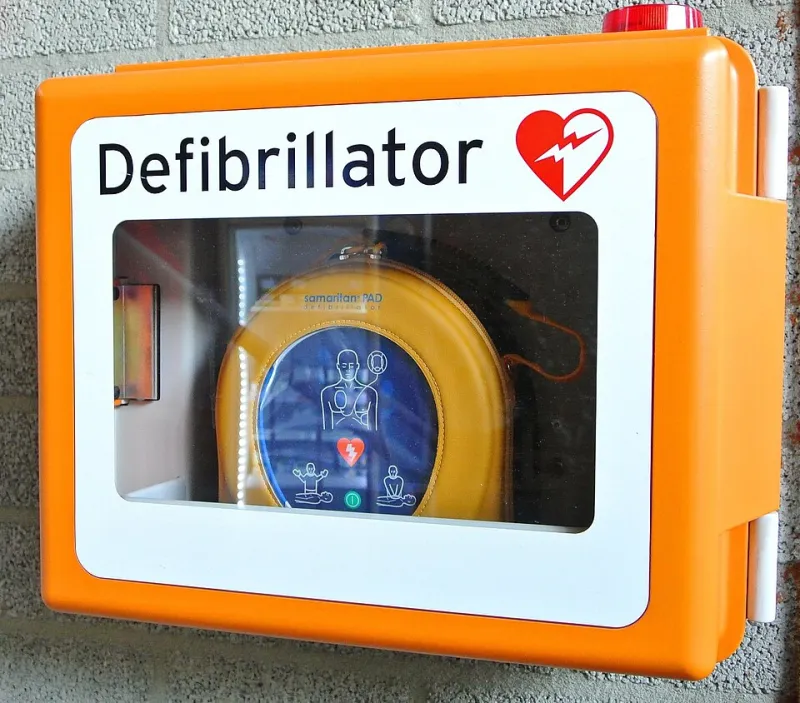
Photo: Basher Eyre , CC BY-SA 2.0, via Wikimedia Commons
There is a version of heart health advice that goes like this: eat better, move more, sleep properly, drink less. All true. All useful. And all of it quietly assumes you have somewhere to walk to, somewhere to sit down, and somewhere to buy an onion that is not a garage forecourt.
I have been thinking about this since I started counting benches.
The argument, plainly
We treat cardiovascular risk as a private matter — a matter of willpower, discipline, personal responsibility. But walk the length of a typical British high street and the picture complicates. One end has a wide pavement, a bus shelter, a greengrocer, a park gate and a bench positioned with a view. The other end has four lanes of traffic, a pedestrian crossing that gives you nine seconds, a cash machine and nothing to sit on except a low wall outside a betting shop.
Two people, same motivation, same good intentions. Two very different sets of opportunities to move, breathe and rest. The difference between them is not character. It is concrete, quite literally.
None of this removes individual choice. It just means that when we talk about heart health, the local environment deserves a place at the table alongside the statins and the step count.
The bench-to-bench route
Here is the idea in its simplest form. A walk that takes you from one bench to the next, and then the next, is a walk that works for almost everyone: for the person three weeks out of cardiac rehab, for the grandparent with a hip that objects, for the teenager who is not going to do a parkrun but will absolutely walk to a shop.
Benches are not a luxury item. They are the difference between a walk that feels possible and a walk that does not.
So on your next walk down the high street, do two things: notice the benches, and notice what is between them. Is the gap short enough that someone who tires easily could manage it? Is there shade in July and shelter in February? Can you actually sit down, or is the bench pushed up against a bin?
The audit
Take twenty minutes. Go for a wander with this list in your head, or on your phone. No clipboard required, although a clipboard does make you look purposeful.
1. Bench to bench. Count the seats. Note the gaps. Are they evenly spread or all clustered near the car park?
2. Pavement quality. Any dropped kerbs? Any stretches where a wheelchair, a buggy or a walking stick would struggle? Uneven paving is an underrated reason people stop going out.
3. Crossing time. Stand at the pedestrian crossing and time the green man. Under ten seconds with four lanes to cross rules out a lot of people.
4. Greenery. Is there a park, a churchyard, a pocket square with a tree? Green space and shade make a walk pleasant rather than a chore, and pleasant walks get repeated.
5. Food, honestly. Where is the nearest place to buy fruit, vegetables or a bag of lentils? Where is the nearest place to buy a pastry? Most high streets have both. The question is the ratio and the walk between them.
6. The pharmacy. Where is it, and does it offer blood pressure checks? Many community pharmacies in the UK do — often free, no appointment needed — and knowing which one is a genuinely useful piece of local knowledge.
7. The noticeboard. Church hall, library, community centre. What is on? Anything moving — a walking group, a choir, a seated exercise class? This is where social connection lives, and it counts.
8. Loos. Unglamorous, essential, and often the real reason a longer walk does not happen.
What the answers mean
You are not looking for a score out of ten. You are looking for the shape of your own neighbourhood: where movement is easy, where it is hard, and what you personally can reach on a wet Wednesday in February.
If the answer is that the only pleasant walk involves a car, that tells you something worth knowing — and worth mentioning. Councils consult on pavements, benches and parks more often than most people realise, and the responses they get tend to come from a very narrow slice of residents.
What you can do without waiting for anyone
- Find your bench-to-bench route and use it. Something is better than a perfect plan you never walk.
- Locate your nearest free blood pressure check and note the opening hours somewhere you will see them.
- Ask one other person to come with you. A standing arrangement at a specific bench at a specific time is a startlingly effective commitment device.
- Report the bench that is broken and the crossing that is too short. Small civic irritations have a way of becoming fixed when someone names them.
The point of all this
Heart health is often framed as a personal project, and it partly is. But the person who walks to the shops rather than driving is not simply more disciplined than the person who does not. They may just have a bench to sit on, a pavement that is not cracked, and a greengrocer within reach.
So the next time you are out on your high street, look at it with different eyes. Count the benches. Time the crossing. Check where the pharmacy is. It is the cheapest heart test you will ever do — and it might change what you expect of your own street.