The Fade and the Reading: What Happens When Your Barber Takes Your Blood Pressure
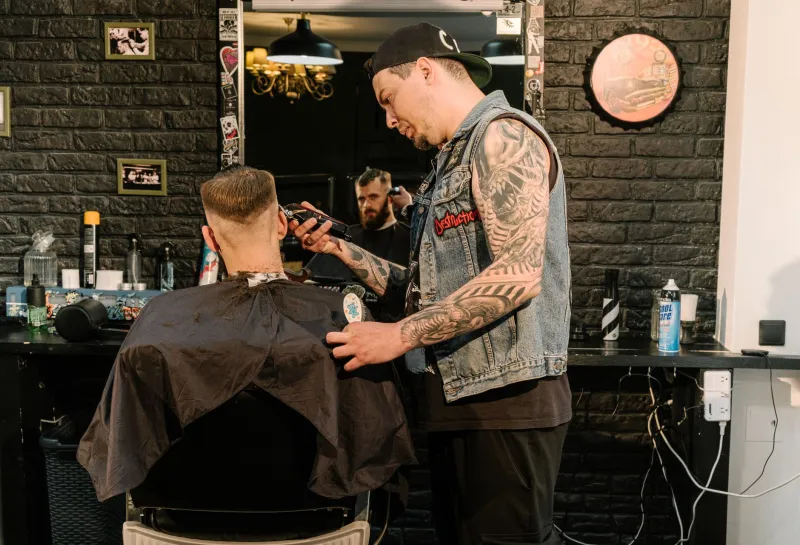
Walk into a barbershop on a Saturday morning and you'll hear the usual: clippers, chatter, someone arguing about football. Less usual, but increasingly normal in 2026: a cuff wrapped around a customer's arm while the mirror shows a number that isn't a price list.
It's a simple idea. Take a place where men already go, add a blood pressure check, and see what happens. The answer, according to the people running these schemes, is a lot of conversations that wouldn't have happened in a GP waiting room.
Why the barber's chair works
Barbershops are not clinics, and that's the point. They're familiar, they're regular, and they're places where people sit still for 20 minutes without feeling like they're taking up someone's time. For men who haven't seen a GP in years — or who'd rather not book an appointment for something that isn't 'broken' — the barber is a low-stakes starting point.
There's also the relationship. A good barber knows your name, your job, your family, and whether you've been looking tired lately. That familiarity can make a blood pressure check feel less like a medical event and more like a sensible pit stop. You're not there to be told off. You're there for a haircut, and someone asks if you'd like your numbers checked while you wait.
What happens during a barbershop check
It's not complicated. The details vary by scheme, but most checks follow the same pattern:
- You sit down, feet flat, back supported.
- The barber or a trained volunteer wraps a cuff around your upper arm.
- You rest for a few minutes — no talking, no phone scrolling.
- The machine takes a reading, sometimes two.
- You get your numbers and a short explanation of what they mean.
Some schemes use validated upper-arm cuffs and offer a second check if the first is high. Others are pop-up events run with a local pharmacy or NHS team, where a healthcare professional is on hand. In 2026, the best barbershop checks are clear about what they are: a screening, not a diagnosis. If something looks off, they'll point you towards your GP or a pharmacy for a proper follow-up.
The numbers, without the lecture
Blood pressure is written as two numbers, like 120/80. The top one (systolic) is the pressure when your heart pushes blood out. The bottom one (diastolic) is the pressure when it relaxes between beats.
For most adults, the NHS describes:
- Ideal: between 90/60 and 120/80 mmHg
- High: 140/90 mmHg or higher in a clinic setting (or 135/85 at home)
- Low: below 90/60 mmHg
A single high reading doesn't automatically mean you have high blood pressure. It can be affected by stress, caffeine, a full bladder, or the fact that you've just rushed in from the bus. That's why a barbershop check should be treated as a prompt, not a verdict. If your numbers are high, the next step is usually a repeat check with your GP or pharmacist, often over a few weeks.
How to find a barbershop check in 2026
There isn't one national list of every barbershop offering checks, but there are reliable ways to find one:
- Ask locally. If your barber has a cuff on the counter, they'll tell you. If not, they might know who does.
- Check your local council or NHS integrated care board website. Many run community health schemes in partnership with barbershops.
- Look at Blood Pressure UK and the British Heart Foundation. Both publish information on where to get a check, including pharmacy services.
- Try your pharmacy. In England, the NHS pharmacy blood pressure check service is available for people aged 40 and over, and it's a good backup if you can't find a barbershop scheme.
- Watch for pop-ups. Community events, men's sheds, faith centres and workplaces often host barbershop-style checks, especially around Know Your Numbers week in September.
When a reading isn't just a reading
A barbershop check can be a useful nudge, but it's not a replacement for a GP appointment. If you have symptoms like chest pain, breathlessness, or sudden weakness, call 999 — don't wait for a haircut.
If your reading is high at the barbers, don't panic. Ask when you last had a check, whether you'd been rushing, and whether they'll write the numbers down for you. Take those numbers to your GP or pharmacy. A one-off reading is a starting point; a pattern is what matters.
The conversation afterwards
The real value of these schemes might not be the cuff at all. It's the conversation that follows. Men who'd never book a GP appointment will happily talk to a barber they've known for years. That conversation can lead to a GP visit, a pharmacy check, or simply a decision to cut down on salt and take a walk after dinner.
In 2026, heart health doesn't have to start in a surgery. Sometimes it starts in a chair, with a mirror, a clip of the clippers, and someone asking, 'Mind if I take your blood pressure?'