Crispy Edges, Kinder Choices: The Sunday Roast Your Heart Can Get Behind
Sunday lunch is one of the few British institutions that still runs on its own clock. The oven goes on, the radio murmurs, and someone is always asking whether the potatoes need another five minutes. It is not a meal that responds well to being told what to do.
So here is the deal: this is not a lecture about giving up crackling or swapping your roast for a sad bowl of steamed kale. It is a practical look at how the Sunday roast can stay recognisably itself while being a bit kinder to your heart. The goal is not perfection. It is a meal you will actually repeat.
Keep the ritual, tweak the maths
Most of us do not eat a Sunday roast because we are chasing a nutrition target. We eat it because it feels like a proper pause. That matters. A heart-friendly roast is not about removing the pleasure. It is about nudging the balance: more vegetables, a sensible portion of meat, a little less salt and saturated fat, and no guilt spiral if you have a Yorkshire pudding.
The easiest place to start is not the ingredients. It is the plate. If the meat takes up half the plate and the veg is an afterthought, the meal is doing more work than it needs to. Try making vegetables the biggest section, potatoes the middle, and meat the smaller section. It still looks like Sunday. It just behaves a bit better.
Meat: think palm, not plate
A portion of cooked meat about the size of your palm is a useful visual cue. That is often smaller than the slice-covered plate many of us grew up with. It is also enough, especially when there is gravy, stuffing and a pile of vegetables alongside.
Leaner cuts help. Chicken without the skin, lean pork, beef with visible fat trimmed, or a smaller portion of lamb are all practical choices. They do not have to be boring. Slow-cooked cuts can be lean and full of flavour. If you are doing a mixed roast, you do not need a bit of everything on the same plate. Pick the one you actually want.
Potatoes: crispy is not the enemy
Roast potatoes have a reputation problem. In truth, the potato itself is not the issue. The oil, the amount, and the habit of adding more halfway through are where things drift. You can still get crispy edges without flooding the tin.
Parboil them, shake them in the pan, and use a measured amount of oil rather than a generous glug. Vegetable oil or olive oil works well. A slightly hotter oven and a single layer in the tin will do more for crispness than extra fat. If you are cooking for a crowd, use two trays rather than overcrowding one. Soggy potatoes encourage more oil. Crispy ones do not need it.
Gravy: the salt you do not see
Gravy is where a lot of hidden salt lives. Stock cubes, granules and ready-made gravy can be salty, and it is easy to add more without tasting. The fix is not to ban gravy. It is to make it work harder with less salt.
Use a lower-salt stock, or make a simple onion gravy with softened onions, a little flour, and stock. Taste before you season. If you are using granules, use less than the packet suggests and top up with water. A splash of the meat juices can add flavour without needing extra salt. And if you are at a carvery, ask for gravy in a jug rather than poured over everything. You will use less and notice it less.
Yorkshire puddings, stuffing and the trimmings
Yorkshire puddings are not a health food, and they do not need to be. They are part of the point. The realistic move is portion, not prohibition. One good Yorkshire pudding is a pleasure. Four is a habit. Make them in a smaller tin if you know you will pick, and use a little oil rather than a lot.
Stuffing can be a quiet salt and fat carrier. If you make it at home, use more onion, herbs and pepper, and less sausage meat. If you buy it, check the label and treat it as a small side rather than a second main. The same goes for pigs in blankets. They can appear on the plate without taking over the plate.
Vegetables: the part that loves you back
This is the section that deserves the most space. Carrots, cabbage, peas, broccoli, swede, parsnips, leeks, greens, cauliflower cheese if you must. The more colour and variety, the better. Fibre helps with fullness, and a fuller plate makes the smaller meat portion feel less like a sacrifice.
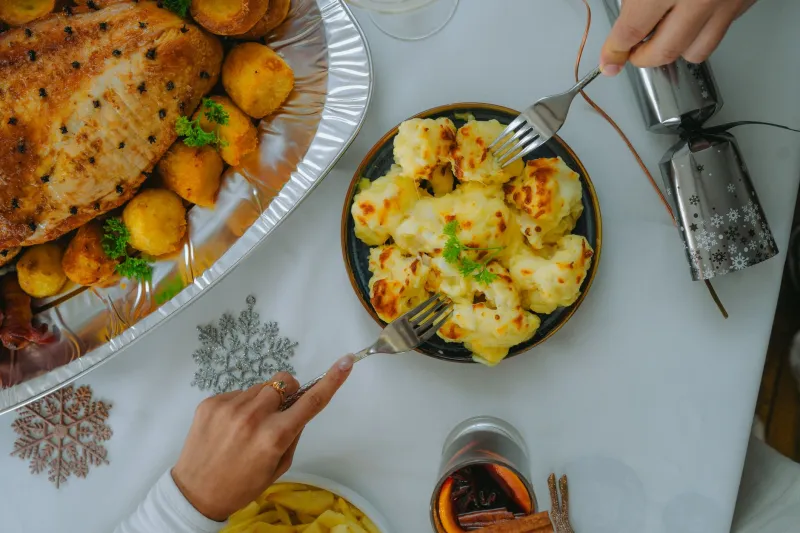
You do not need to steam everything into sadness. Roast vegetables in a little oil. Braise red cabbage. Add peas at the last minute. Use herbs, lemon, garlic and black pepper instead of relying on salt. If you are doing cauliflower cheese, make the cheese sauce with less cheese and more mustard and pepper. It still counts as a vegetable. It is just a vegetable with a hobby.
At the supermarket and the pub
Supermarket meal deals and prepared roasts can be a mixed bag. Check the front-of-pack labels for salt and saturated fat, but do not get stuck there. A chicken, a bag of potatoes, a couple of veg and a lower-salt stock will usually beat a ready-made roast dinner on both cost and control. If you are buying gravy, compare brands. The difference in salt can be surprising.
Pub menus are not designed around your blood pressure, and that is fine. You are there for the occasion. Practical moves: choose the smaller roast if there is one, ask for extra vegetables, have sauces on the side, and do not feel obliged to finish everything. A carvery gives you control over portion size. Take the smaller plate if you are not especially hungry. Nobody is grading you.
The 80/20 Sunday
A heart-friendly approach is not a weekly audit. It is a pattern. If most of your meals across the week are varied, with plenty of vegetables, beans, pulses, wholegrains and modest portions of meat, a Sunday roast with all the trimmings is not a crisis. It is a meal.
The more useful question is not whether this one roast is perfect. It is whether the Sunday roast is the only time you eat vegetables, or whether the gravy is doing more salt work than the rest of the week combined. Small, repeatable changes beat dramatic ones every time.
The Monday after
You do not need to punish yourself on Monday. A normal breakfast, a walk, and a glass of water is a better response than skipping meals or promising a detox. If you want to make one change for next Sunday, pick one: lower-salt gravy, more vegetables, or a slightly smaller meat portion. Then keep the rest exactly as it is.
The Sunday roast has survived wars, recessions and the invention of the air fryer. It can survive a few kinder choices. It might even taste better for them.