Before the Whistle: The Five-Minute Heart Habit That Lives in Your Kitchen
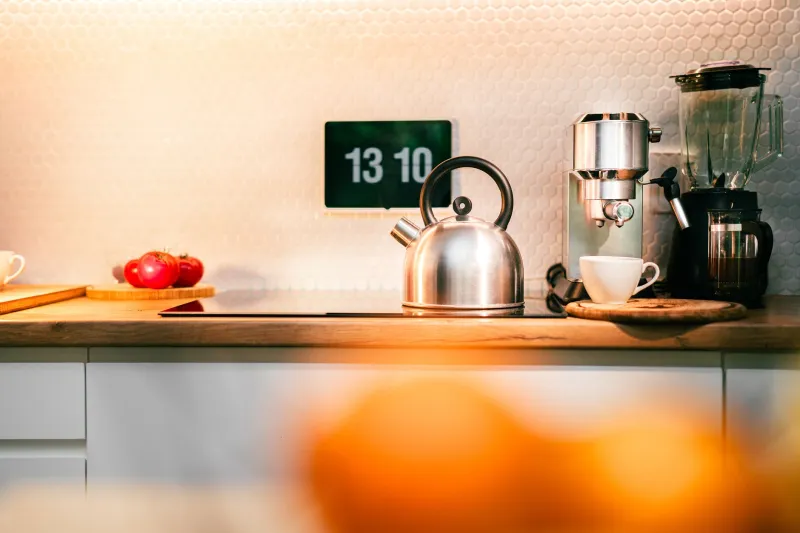
The kettle is one of the most honest clocks in a British home. It cannot be rushed, it gives you a warning rumble, and it always finishes. That makes it a surprisingly good anchor for a daily heart check that takes less time than scrolling your phone while the tea brews.
No watch. No app. No gym kit. Just a chair, a quiet minute, and a little curiosity about your own pulse.
Start with the kettle, not a gadget
Put the kettle on. Sit down properly — not perched on the arm of the sofa, not halfway out the door. Let your shoulders drop. While the water heats, rest your hand palm-up on your thigh and find your pulse at the wrist, just below the thumb side. Use two fingers, not your thumb. You are not pressing for buried treasure; a gentle touch is enough.
If you cannot feel it there, try the side of your neck, under the jaw, lightly. Do not press hard. Count the beats for 30 seconds and double it, or count for a full minute if you prefer. That is your resting heart rate for today.
Do it before caffeine, if you can. Coffee, tea, a stressful email, or a sprint for the bus will all push the number up. The point is not to get a perfect number. The point is to know your normal.
What a resting pulse can tell you (and what it can't)
For most adults, a resting heart rate somewhere between 60 and 100 beats per minute is considered typical. Fit people often sit lower. Some medicines, illnesses, anxiety and caffeine can nudge it higher. One reading is a snapshot, not a diagnosis.
What matters is the pattern. If your pulse is usually in the low 70s and suddenly sits in the 90s for several days, that is worth a note. If it is regularly over 100 while you are sitting quietly, or regularly under 50 when you are not a trained athlete and you feel dizzy or tired, speak to your GP.
Write it down somewhere dull and useful — the notes app, the back of the shopping list, a diary. A line a day is enough. You are building a baseline, not applying for a medical degree.
Rhythm: the bit most of us skip
Rate is only half the story. Rhythm is the other half. As you count, ask yourself: does it feel steady? Tap the beat gently with one finger. Is it regular, like a metronome, or does it stumble, pause, or race for a few seconds?
Most people have the odd flutter now and then, especially after a late night, too much coffee, or a stressful day. But a pulse that is persistently irregular, or palpitations that come with chest pain, breathlessness, dizziness or fainting, needs attention. Do not wait for the kettle to boil on that one. Call 111 or, if you have chest pain that feels heavy, tight or spreading, call 999.
The kitchen-table red flags
A daily pulse check is not a replacement for the NHS. It is a prompt to notice. Book a GP appointment if you have:
- a resting heart rate that stays unusually high or low for you
- a pulse that feels irregular again and again
- palpitations that last longer than a few minutes or keep coming back
- chest discomfort, breathlessness, or dizziness with your heart symptoms
- a family history of early heart disease or sudden cardiac death
If you are over 40 in England, you are entitled to an NHS Health Check every five years. In Scotland, Wales and Northern Ireland, the arrangements differ, but your GP surgery can tell you what is available. If you have a family history or symptoms, do not wait for a letter.
Make it boring, make it stick
The best heart habit is the one you will actually repeat on a wet Tuesday. So keep it small. Kettle on, sit down, find pulse, count, note it, tea. If you miss a day, start again the next time you boil the kettle. No penance, no catch-up.
You might also try the office version: one minute at your desk before you open your inbox, or during the ad break when the telly is on. The setting does not matter. The regularity does.
A five-minute check will not catch everything. It will not replace blood pressure checks, cholesterol tests or a conversation with your GP. But it will teach you what your heart feels like on an ordinary day. And ordinary days are exactly where prevention lives.