Cold Hands, Steady Heart: A Very British Winter Guide Without the Hibernation
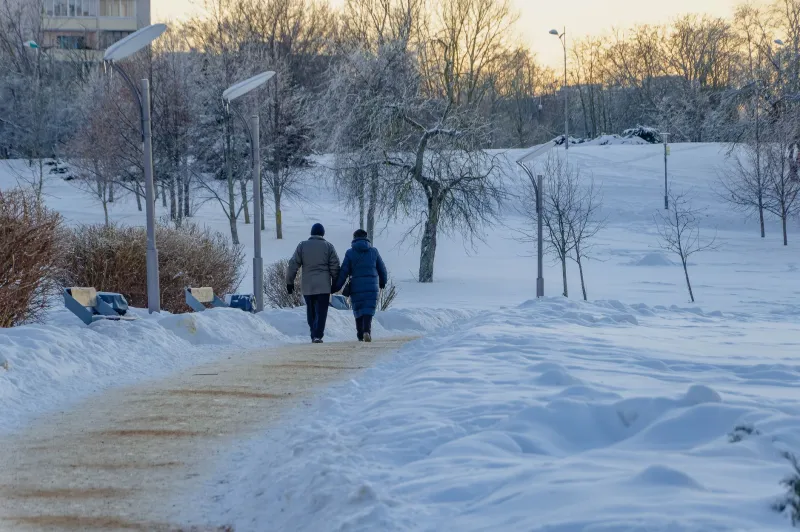
November in Britain: dark by four, a Met Office warning for something, and a powerful urge to cancel all plans until spring. Entirely understandable. But four months indoors is not great for your heart, your head or your social life, and the cold is something you can work with rather than hide from.
This is not a scare piece. It is a practical one, written for the sort of winter we actually get here — damp, windy, occasionally spectacular, and never quite as bad as the headlines suggest.
What the cold actually does (short version)
When you get cold, the blood vessels near your skin narrow to keep heat in. That nudges your blood pressure up and means your heart has to work a bit harder. Cold weather is linked with more heart attacks and strokes, especially in older people and anyone with an existing heart condition. Add exertion on top — clearing snow, hurrying for a bus, lugging shopping — and you have a moment when your heart is being asked for more than usual.
None of that means stay in. It means be a little deliberate about how you go out.
Layer like you mean it
Fashion can wait. Several thin layers trap heat far better than one thick one: a base layer, a fleece or jumper, then something windproof and waterproof on top. Hat, gloves, scarf, warm socks, shoes with actual grip. There is no such thing as bad weather, only the wrong coat — and a bus stop in a sleet shower is no place for wet feet.
Check the forecast before you commit to a long walk. Wind and rain matter as much as temperature, and a Met Office yellow warning is worth reading rather than scrolling past.
Warm up before you head out
Cold muscles plus sudden effort is a rotten combination. Two minutes of marching on the spot and a few arm circles indoors makes a genuine difference, then start slowly for the first few minutes outside.
If it is icy, walk like a penguin: short steps, weight over the front foot, arms out for balance, and hands out of pockets. Leave earlier than you need to. Rushing on ice is how winters end in A&E.
Keep the blood pressure routine boring and reliable
If you take medication for blood pressure or anything heart-related, winter is not the moment to be casual about it. Order repeat prescriptions before the Christmas crush. Use a weekly pill organiser if you keep forgetting. And do not stop taking anything because you feel fine — that is precisely the point of it.
If your GP has asked you to monitor at home, keep the routine consistent: same time of day, sit still for five minutes first, arm supported at heart height. Readings often creep up in colder months. Do not adjust your own dose. If numbers are consistently higher than usual, or you feel dizzy or unusually breathless, ring the surgery.
The heating question, without the guilt
Current advice from the NHS and Age UK is to heat the living room to at least 18°C if you can, and keep bedrooms at 16°C or above overnight. Close curtains at dusk, use draught excluders, and try not to park furniture in front of radiators.
If the bill is the worry, help exists and there is no shame in it. Check gov.uk for the Warm Home Discount and winter fuel payments, look at your council's household support fund, and ask about warm spaces in local libraries and community centres. Citizens Advice can talk you through what you are entitled to. Being cold at home is a health issue, not a character flaw.
Staying connected is heart work, not a soft extra
Loneliness is linked with poorer heart health, and winter shrinks our social lives by default. So be a bit deliberate: a standing weekly phone call, a walk with a friend, a club, a coffee after parkrun, a chat with the neighbour whose curtains are still shut at eleven.
If you are the one checking in on an older relative, that call is doing two people good.
Move, but pick your moments
Daylight is precious, so use it. A lunchtime walk gives you light, air and steps all at once. Fifteen minutes most days is a realistic target in December. If the pavements are treacherous, take it indoors — stairs, a YouTube workout, the local leisure centre pool, a wander round the shopping centre that does not require you to buy anything.
One caution: if you have a heart condition, do not be the one clearing the driveway. Shovelling snow is heavy, stop-start exertion in the cold. Ask for help, or do it slowly with breaks — and stop immediately if you feel chest discomfort or breathlessness.
Food, drink and the pull of the sofa
Winter food can be cheap, hearty and genuinely heart-friendly: soups, stews, lentils, beans, root veg, tinned tomatoes, frozen peas. Watch the salt in shop-bought soups and ready meals, which can be startling. And remember that alcohol warms you for about ten minutes before lowering your core temperature — plus it nudges blood pressure up and adds calories nobody counts in December.
One genuinely useful winter job: check whether you are eligible for the free flu vaccine. That includes everyone over 65, pregnant women, and people with certain long-term conditions such as heart disease. Your pharmacy can tell you in about thirty seconds.
Red flags: this is 999, not a cup of tea
Call 999 immediately if you have:
- Chest pain, tightness, heaviness or a squeezing sensation that comes on suddenly and does not ease within a few minutes, or that goes away and returns
- Pain spreading to your arm or arms, jaw, neck, back or stomach
- Sudden severe breathlessness, or breathlessness at rest
- Chest discomfort along with feeling sick, sweaty or light-headed
- Palpitations with fainting or near-fainting
Do not drive yourself. Do not ring round the family for a second opinion first. If you are unsure, call anyway — ambulance services would far rather have the call. If you are with someone who has these symptoms, stay with them and unlock the front door.
Use 111 for urgent advice that is not an emergency, and your GP for the slower stuff: new breathlessness on the stairs, swelling in the ankles, readings that keep climbing, or a cold that seems to be triggering symptoms you recognise from your angina. Keep the surgery number somewhere you can find it in the dark.
The bottom line
Cold weather is a real load on the heart. The answer is not four months under a duvet — it is layers, pacing, prescriptions sorted, people around you, and knowing exactly what 999 looks like. Wrap up, go out, come home to soup.